Ordering custom aprons can look simple at first. Choose a colour, add your logo and decide how many you need.
In practice, a few more decisions need to happen before production starts.
The fabric affects how comfortable the apron feels and how well it handles repeated washing. The apron style needs to suit the work being done. Even a logo that looks good on a website may need adjustments before it can be embroidered or printed onto fabric.
Getting these details right before placing a bulk order can save time, reduce revisions and help ensure the finished aprons actually work for the people wearing them.
Here is what businesses should consider before ordering custom aprons.
Decide Where the Aprons Will Be Used
Start with the working environment.
An apron for a café server has different requirements from one used in a commercial kitchen, workshop or food production facility.
Think about what employees do during a typical shift.
Do they work around food and liquids? Do they need to carry tools, order pads or mobile devices? Are they working in a warm environment? Will customers see them throughout the day?
These questions affect almost every decision that follows.
A lightweight apron may be comfortable for front-of-house staff but provide too little protection for heavier work. A thick canvas apron may be durable but unnecessarily warm for someone who wears it for an entire shift.
The intended use should guide the specification.
Choose the Right Apron Style
Commercial aprons come in several styles.
Bib aprons provide coverage across the chest and lower body, making them common in kitchens, cafés and many hospitality environments.
Waist aprons provide less coverage but can work well for servers and other employees who mainly need pockets or somewhere to keep small items.
Longer aprons offer more lower-body coverage, while shorter designs may give employees greater freedom of movement.
The best style depends on the job.
It can also depend on the brand. A full canvas bib apron creates a very different visual impression from a simple waist apron.
Before deciding, consider both function and how the apron fits with the rest of the employee uniform.
Pay Attention to Fabric
Material has a major influence on comfort, durability and maintenance.
Cotton is soft and breathable, while poly-cotton blends can offer easier maintenance and good durability for everyday commercial use.
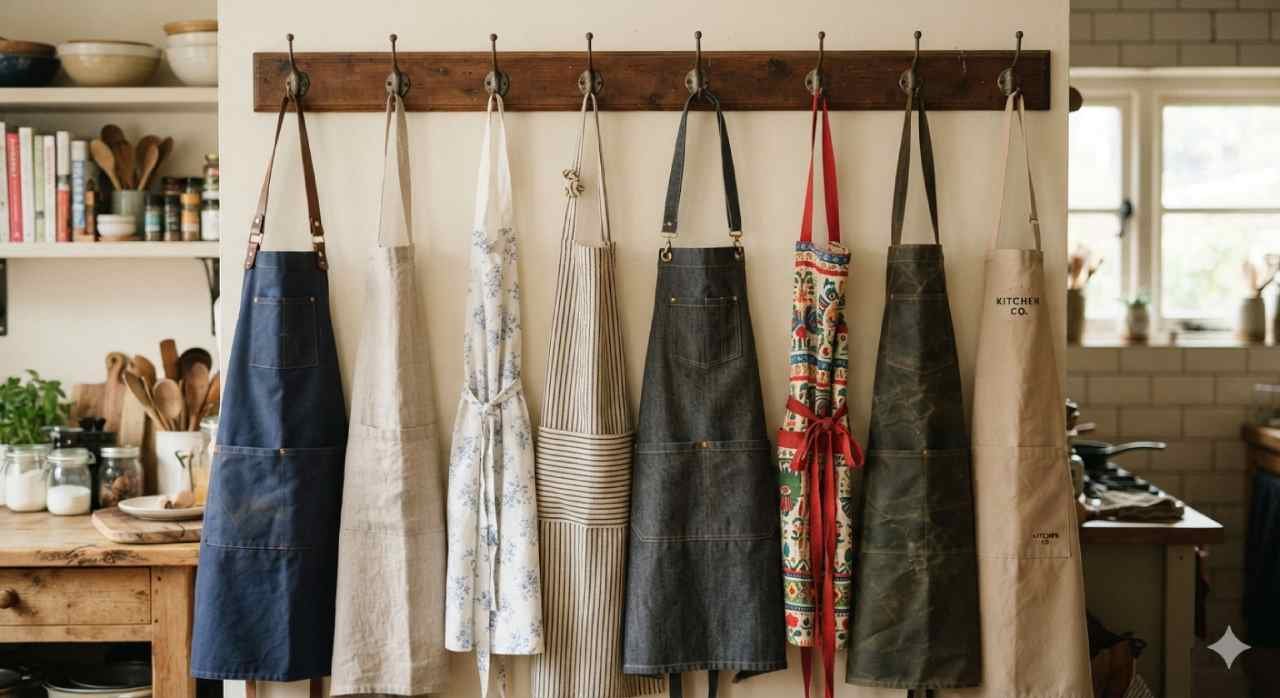
Canvas is heavier and more structured, making it useful when greater durability is required. Denim is another option for businesses looking for a distinctive, casual appearance.
Polyester can be practical where wrinkle resistance, quick drying or certain printing methods are priorities.
There is no need to choose the heaviest fabric simply because it seems more durable.
Employees who spend hours wearing an apron may value a lighter material, particularly in warm environments.
Ask for fabric samples before making a final decision. A specification sheet can tell you the composition and weight, but holding the actual material gives you a much better idea of how the finished apron may feel.
Think About How the Apron Will Be Washed
Commercial aprons are likely to be washed frequently.
A restaurant may need to clean uniforms after every shift, while some workplaces use commercial laundry services with different washing conditions from a household machine.
Check the care requirements before approving the fabric.
Will it shrink? Does it need to be washed at a specific temperature? Is tumble drying recommended? Does it wrinkle easily? How well does the colour hold after repeated washing?
These practical details can affect the long-term cost of the aprons.
A fabric that requires special care may look good initially but become inconvenient when dozens or hundreds of aprons need to be cleaned every week.
Choose Between Printing and Embroidery
Adding a company logo is one of the main reasons businesses order custom aprons.
The two most familiar options are printing and embroidery, but the right choice depends on the design and material.
Embroidery creates a textured, stitched finish and is commonly used for smaller logos. It can work particularly well on stable fabrics such as canvas, denim and many uniform fabrics.
Printing allows more flexibility for certain large or detailed designs. Different printing methods may be recommended depending on the fabric composition and artwork.
Do not assume the same logo file used for your website can go directly into production.
Embroidery may require digitisation, while printed designs need artwork prepared at an appropriate resolution and format.
Ask your supplier what files are required before sending the final design.
Check Logo Size and Placement
A logo can look surprisingly different once it moves from a computer screen to an apron.
A very small design may lose fine details when embroidered. A large logo can dominate the apron or become distorted when the wearer moves.
Placement matters as well.
Chest placement is common for bib aprons because the logo remains clearly visible. Some brands choose a more subtle logo near a pocket, while others use a larger graphic as part of the overall design.
Consider what employees will wear underneath the apron and whether straps, pockets or seams could interfere with the logo.
A physical sample is useful here because it allows you to see the real scale and placement before approving a full production run.
Decide What Pockets You Need
Pockets should be designed around the work employees actually do.
Restaurant servers may need space for an order pad, pens or payment device. Baristas might need smaller tools close at hand. Workshop staff could require deeper or reinforced pockets.
Adding pockets simply because they look useful can create unnecessary bulk.
Think about the size, position and number required.
The weight of the items carried also matters. A lightweight fabric may need additional reinforcement if employees regularly place heavier tools in the pockets.
Custom manufacturing gives businesses more control over these details, so it is worth specifying them carefully.
Consider Straps and Adjustability
Fit is especially important when the same apron design will be worn by many employees.
Adjustable neck and waist straps can make one apron suitable for a wider range of body sizes.
There are also different strap configurations to consider.
Some people find traditional neck straps uncomfortable during long shifts, particularly when the apron itself is heavy. Cross-back straps distribute the weight differently and may be preferable for certain work environments.
Hardware matters too.
Buckles, rings and other components should be appropriate for frequent use and washing.
Ask whether the strap length can be customised and how the adjustment system works before approving the design.
Understand the Minimum Order Quantity
Custom manufacturing often comes with a minimum order quantity, usually referred to as the MOQ.
This is the smallest number of units a manufacturer is willing to produce for a particular custom order.
The MOQ may change depending on the fabric, colour, customization method or complexity of the apron.
Before spending too much time finalising a design, confirm whether the supplier’s minimum quantity matches your requirements.
If you operate several locations, you may also want to ask whether different sizes or designs can be combined within the same production order.
Do not assume this is possible. It is better to confirm early.
Ask About Samples
A sample is one of the most useful steps before bulk production.
It allows you to check the fabric, sizing, stitching, pockets, straps, logo placement and overall appearance.
Try the apron on rather than simply inspecting it on a table.
Can the straps be adjusted easily? Are the pockets in a comfortable position? Is the apron too long or too short? Does it feel too heavy after being worn for a while?
When working with an apron supplier, ask what sampling options are available and whether you can approve a pre-production sample before the complete order is manufactured.
Making a change at the sample stage is much easier than discovering an issue after hundreds of units have been produced.
Confirm Production and Delivery Times
Custom aprons take longer to produce than buying ready-made products.
Production time can depend on order quantity, material availability, customization and the complexity of the design.
Shipping needs to be considered as well, particularly when working with an overseas manufacturer.
If the aprons are needed for a new restaurant opening, event or product launch, work backwards from the required delivery date.
Allow some extra time for sample approval and possible revisions.
Placing an order with no room for delays can force you to approve details too quickly or pay more for faster shipping.
Check the Final Specification Before Production
Before approving production, review everything in writing.
Check the apron dimensions, fabric composition, fabric weight, colour, pocket design, straps, logo size and logo position.
Confirm the quantity and any size breakdowns.
It can help to treat the approved sample and specification sheet as the reference for production. If something looks different in the final order, there is then a clear point of comparison.
Small details are easy to overlook when discussions happen across multiple emails or messages, so having one final specification can prevent confusion.
A Good Custom Apron Starts Before Production
The quality of a custom apron depends partly on manufacturing, but many problems can be prevented much earlier.
Start with the people who will actually wear the apron. Consider their working environment, how long they wear it and what they need to carry.
Then choose the material, style and branding around those requirements.
Ask your apron supplier about minimum quantities, sampling, production times and customization options before committing to a large order. A physical sample is particularly valuable when you are developing a new design.
The more clearly the apron is specified before production starts, the fewer surprises there are when the final order arrives.
A good custom apron should look right for the brand, but it also needs to work through long shifts, regular washing and everyday use. That is what makes it useful long after the logo has been added.