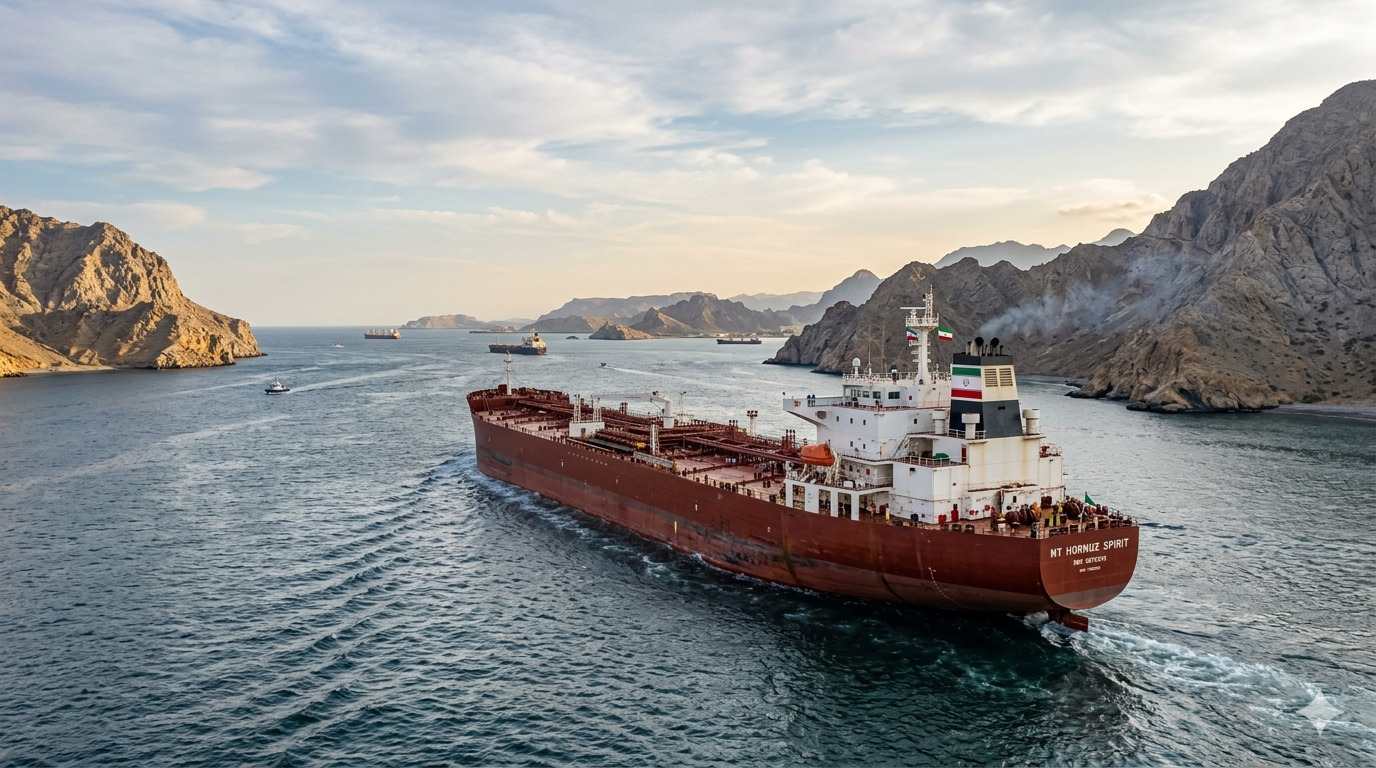

JAKARTA — Early on the morning of March 4, the container ship *Express Rome* became one of the last vessels to attempt a transit through the Strait of Hormuz before Iranian Revolutionary Guard Corps patrol boats forced it to turn back. Since that day, the 34-kilometer-wide chokepoint separating Iran from the United Arab Emirates has been effectively closed to commercial traffic — the single most consequential disruption to global energy supply in recorded history, according to the International Energy Agency.
Seven weeks on, the consequences are no longer abstract. They are visible in the queues stretching around petrol stations in Manila, in the half-empty shelves of hardware stores in Jakarta where propane canisters once sat, and in the quiet, mounting anxiety inside finance ministries from Bangkok to Hanoi. Southeast Asia — a region of 700 million people that had spent a generation positioning itself as the world’s next manufacturing powerhouse — finds itself on the wrong side of a war it had nothing to do with starting.
A Chokepoint Like No Other
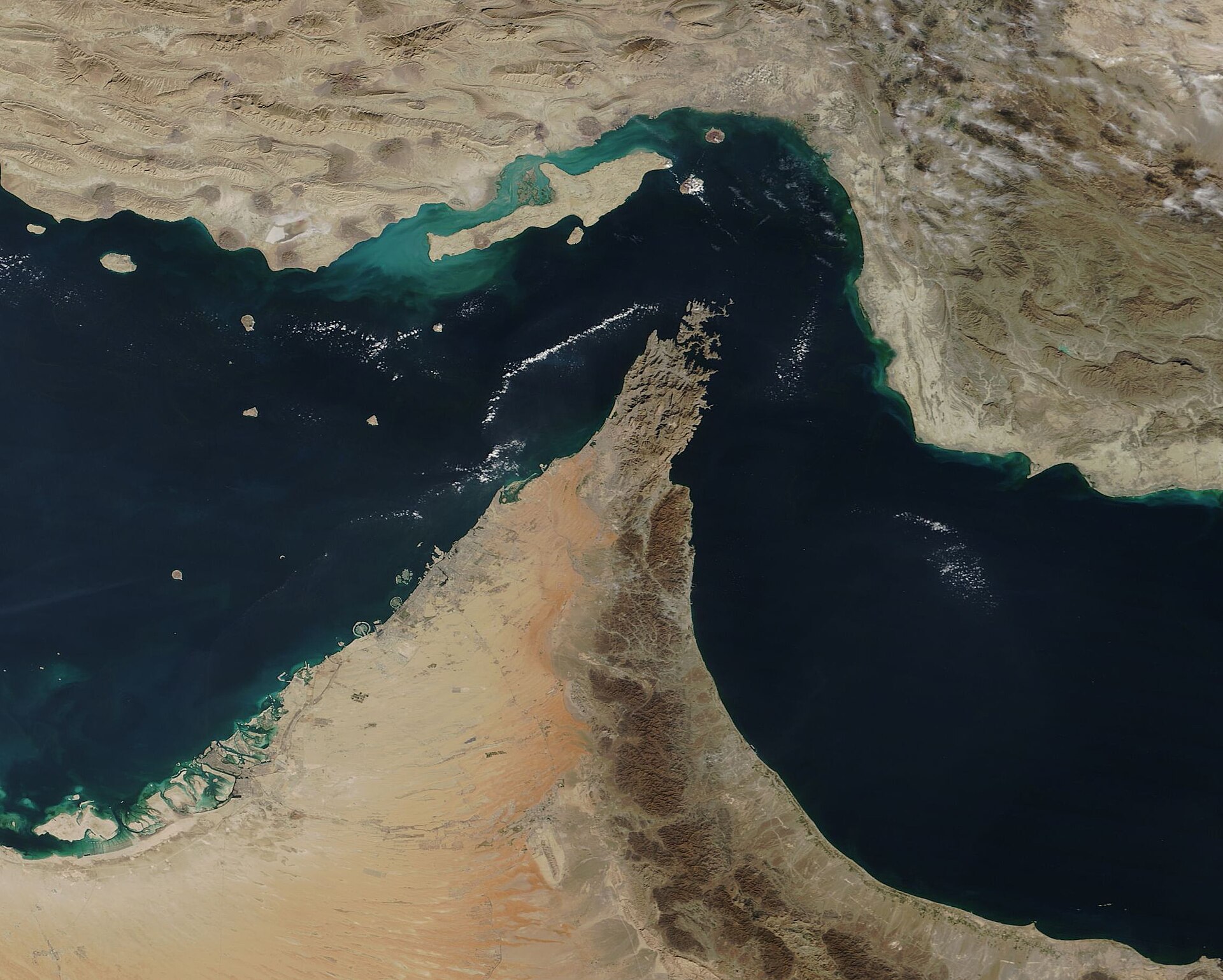
To understand why this crisis lands so heavily on Southeast Asia, you first have to understand what the Strait of Hormuz actually does. Before the conflict, roughly 20 percent of all global seaborne oil passed through it daily, alongside approximately 20 percent of the world’s liquefied natural gas supply. The total value of commodities flowing through that 34-kilometer passage in a normal year runs into the hundreds of billions of dollars.
No other choke point — not the Malacca Strait, not the Suez Canal — carries that kind of concentrated energy load for Asia. Saudi Arabia and the UAE have limited pipeline alternatives via the Red Sea port of Yanbu, but those routes can absorb only a fraction of normal volumes, and the Houthis in Yemen have already demonstrated they can threaten shipping there too.
The blockade, enforced by Iranian IRGC units that have carried out at least 21 confirmed attacks on merchant vessels, triggered an immediate market response. Brent crude, which was trading at roughly $80 a barrel when the conflict began in late February, broke through the $100 mark by March 8 — the first time in four years — and surged to $126 per barrel at its peak. That single-month surge of nearly 59 percent exceeded the oil price spike seen during the 1990 Gulf War, according to data compiled by the CASE for Southeast Asia research group.
The Geography of Vulnerability
Not all Southeast Asian nations are equally exposed, but none will be left untouched.
The Philippines declared a state of national energy emergency on March 24, becoming the first country in the world to do so in response to the conflict. The decision was not dramatic posturing: the country imports 98 percent of its crude oil, the overwhelming share of it from the Middle East. President Bongbong Marcos told the public the country had enough crude to sustain itself until June 30, a statement that, while intended to calm nerves, also revealed precisely how narrow the margin of safety had become.
Indonesia’s situation is more complicated. As Southeast Asia’s largest economy, with a GDP of around $1.5 trillion — roughly 38 percent of the region’s total — Jakarta carries an outsized fiscal burden when oil prices spike. The government set aside 381.3 trillion rupiah, equivalent to about $22.5 billion, for fuel and energy subsidies in its 2026 national budget. That allocation was calculated on an assumed oil price of $70 a barrel. With Brent now trading above $100 and showing little sign of returning to that baseline, the gap between what was budgeted and what will actually be spent is growing fast.
Indonesia is an oil producer, but it is also a large importer — the country meets more than one-third of its crude needs with foreign supply, of which around 25 percent was routed through the Strait of Hormuz. Its domestic fuel reserves, according to analysis by CASE for Southeast Asia, are sufficient for approximately 20 days of consumption. The government has since scrambled to diversify import sources, reaching out to suppliers in West Africa and the United States, but the logistics of rerouting established supply chains mid-crisis are neither quick nor cheap.
Promotion :Discover How to Hack Your Life
Thailand is the most exposed of the major ASEAN economies when it comes to Gulf oil specifically. Vietnam, meanwhile, holds the smallest known strategic petroleum reserve in the region. Singapore, as an entrepot with underground storage caverns on Jurong Island capable of covering more than 200 days of domestic demand, has the most cushion — but Singapore’s role as a regional refining and shipping hub means a sustained energy shock resonates through its economy in ways that raw reserve figures don’t fully capture.
Cambodia, Laos, Myanmar, and Timor-Leste — smaller, poorer, and less able to absorb price shocks through subsidies or foreign exchange reserves — face a different category of hardship altogether. In Cambodia, tuk-tuk drivers have been rushing to fill LPG tanks before supplies run out. In Myanmar, the government has imposed alternating driving days.
The LPG Crisis Within the Crisis
Buried inside the broader oil shock is a separate emergency affecting hundreds of millions of households directly: the LPG supply crunch.
Indonesia consumes roughly nine million metric tons of LPG annually, of which approximately 7.2 million tons — around 80 percent — must be imported. Historically, a significant share of those imports transited the Strait of Hormuz. The closure has not just inflated prices; it has disrupted the delivery pipeline entirely, creating shortages that fall hardest on lower-income households that depend on bottled gas for cooking.
India has experienced this acutely. Some 60 percent of India’s LPG demand is met through imports, the bulk of which passed through Hormuz. In cities like Mumbai, dozens of restaurants shut down fully or partially in early March after cooking gas deliveries dried up. In Gujarat, the gas shortage forced its ceramics industry — which relies heavily on gas-fired kilns — to suspend operations.
For Southeast Asia’s urban poor, the convergence of higher fuel prices and LPG shortfalls is compressing household budgets at a moment when post-pandemic recoveries in some countries are still incomplete. Indonesia’s annual inflation accelerated to 4.76 percent in February 2026, its highest reading since March 2023. Housing costs, which include electricity and household fuel, were among the fastest-moving components — rising 16.19 percent year-on-year — a striking figure that illustrates how energy price shocks transmit into the broader cost of living.
The Fiscal Pressure Building Under the Surface
For governments in the region, the energy shock is posing a question that has no comfortable answer: absorb the cost through subsidies and blow up your fiscal position, or pass it on to consumers and risk a political backlash.
Indonesia has historically leaned toward the former, with fuel subsidies functioning as an implicit social contract between the government and the population. That contract is now being tested. The subsidy covers roughly 30 to 40 percent of petrol and diesel prices for consumers. Sustaining it at current oil prices — more than 45 percent above the budget assumption — means the energy subsidy bill will consume a far larger share of the national budget than planned. This in a year when President Prabowo Subianto is also running an expensive free meals program and other social spending initiatives that have already strained the fiscal outlook.
The rupiah is reflecting this anxiety. The currency has slid to record lows, touching 17,180 per dollar recently — a level that makes every dollar-denominated barrel of oil that much more expensive for domestic refiners and consumers. Bank Indonesia has kept its key interest rate unchanged since October 2025, following a cumulative 150 basis points of cuts since September 2024, as it tries to balance inflation risk against the desire to support growth. The IMF has since cut Indonesia’s 2026 GDP growth forecast to 5.0 percent, down from 5.1 percent, citing global uncertainty — though analysts privately suggest the downside risk is steeper if oil prices remain elevated through the third quarter.
Thailand and the Philippines face their own versions of the same bind. In both countries, the government’s budget assumptions for oil prices have been overtaken by events, forcing emergency revisions and, in the Philippines’ case, an outright national emergency declaration.
The Price Scenarios and What They Mean
Wall Street has been stress-testing the oil outlook against a range of scenarios, and the numbers are not encouraging for the region.
Research from the Federal Reserve Bank of Dallas, published in March, concluded that a closure of the Strait of Hormuz that removes close to 20 percent of global oil supplies for a single quarter would be sufficient to raise the average WTI price to approximately $110 a barrel and knock an annualized 2.9 percentage points off global real GDP growth. If the closure persists into a third quarter, global GDP growth in full-year 2026 could fall by as much as 1.3 percentage points from baseline.
Goldman Sachs warned this month that Brent could average above $100 for the full second half of 2026 if the closure persists for another month, rising further to an average of $120 in the third quarter and $115 in the fourth quarter under a more prolonged scenario. A separate analysis circulated by Bloomberg Intelligence puts the $150-per-barrel threshold in play if the disruption extends past mid-May — a level that, historical precedent suggests, would be severe enough to trigger the kind of demand destruction that eventually rebalances supply, but at considerable economic pain in the interim.
The stagflationary dynamic — rising prices alongside slowing growth — is particularly dangerous for the middle-income economies of Southeast Asia. Central banks that were in rate-cutting mode just six months ago are now being pushed in the opposite direction by inflationary pressures, even as slower global growth erodes the export demand their economies depend on.
A “Transport Shock,” Not Just a Supply Shock
Economists and shipping analysts are careful to frame this crisis as something structurally different from past oil supply disruptions. The oil has not disappeared — it is sitting in wells across Saudi Arabia, Iraq, Kuwait, and the UAE. What has broken down is the system for moving it.
This distinction matters because it creates a different set of secondary effects. Vessels that would normally take seven to ten days from the Gulf to key Asian ports are now spending an extra 10 to 14 days rerouting around southern Africa via the Cape of Good Hope. Terminal congestion at alternative ports is building. War-risk insurance premiums for any vessel transiting anywhere near the Persian Gulf have surged from a fraction of a percent to multiples of their pre-conflict rate.
The disruption has also spilled into fertilizer markets in ways that are less visible but potentially more lasting. The United Nations Conference on Trade and Development has warned that the blockade is choking off fertilizer exports from the Gulf region, threatening the next agricultural planting season across ASEAN’s farming economies. Food security — already strained by post-pandemic supply chain fragility and climate-related disruptions — now faces an additional shock arriving from an entirely different direction.
QatarEnergy, operator of the world’s largest LNG export facility, declared force majeure on all exports after the closure and disclosed that parts of its production infrastructure had sustained missile damage that could take up to five years to fully repair. That announcement alone has reshaped LNG supply projections for the better part of this decade.
The Response: Scrambling Across the Region
Regional governments have moved with unusual speed to manage the immediate fallout, even if the policy options available to them are limited.
The Philippines moved government offices to a four-day work week. Thai officials have been encouraged to work from home and limit official travel. In Vietnam, the government advanced the rollout of E10 ethanol-blended fuel to cut oil import volumes. Indonesia accelerated its B35 and B40 biodiesel mandates — lifting the mandated palm oil share in biofuels toward 50 percent in 2026 — partly as a practical supply response and partly as a political signal that Jakarta is acting. Thailand ramped up B20 biodiesel supply to address rising transport costs.
Singapore’s ASEAN Economic Ministers, meeting in emergency session, issued a rare joint statement warning that the supply disruptions “are leading to higher freight, insurance, and logistics costs and contribute to inflationary pressures on energy, food, and other essential goods” across the region.
Behind the scenes, several regional governments have been reaching out to alternative suppliers. West African producers, U.S. exporters, and Australia have all received approaches. But the logistics of redirecting oil flows take time. Long-term supply contracts, shipping route economics, and refinery specifications built around Gulf crude cannot be renegotiated in weeks.
“Handing Our Necks to Someone Else”
Among Indonesian energy experts, the prevailing mood is one of frustrated recognition — that the warnings about energy security had been made before, and not adequately heeded.
Dr. Rachmawan Budiarto of the UGM Center for Energy Studies put it plainly in remarks that circulated widely in policy circles: “Entrusting the fate of our energy supply to other countries is like handing our neck to someone else.” The Hormuz closure, he argued, is not just an energy crisis but a national security one — a demonstration that no amount of macroeconomic management insulates a country from the hard constraints of physical supply chains it does not control.
The longer-term argument Budiarto and others are making — that the crisis should accelerate the region’s transition toward domestic renewables — is strategically sound. Research from the Asia Competitiveness Institute shows that hydropower is the cheapest electricity source in Indonesia, Vietnam, and the Philippines, with solar PV competitive across much of the region. But there is a complication: solar panels, batteries, and the critical minerals that underpin the clean-energy buildout are heavily concentrated in Chinese supply chains. Moving away from Middle Eastern oil risks deepening reliance on Chinese clean-energy manufacturing — a different but related form of the same strategic vulnerability.
Waiting for an Off-Ramp
There are reasons to believe the disruption will not be permanent. A fragile US-Iran ceasefire, announced two weeks ago, has held — for now. Goldman Sachs reduced its near-term oil price forecast following the ceasefire news, though it stressed that the Strait remains effectively closed pending security guarantees that shipping companies have not yet received. Iranian control over vessel flows has not meaningfully loosened. Shipowners and insurers are waiting for clarity before risking vessels through waters where IRGC patrol boats and sea mines remain active hazards.
Some economists, including Irfan Syauqi Beik, who advises Indonesian government entities, have urged investors not to overreact — maintaining that a “wait-and-see” posture is preferable to a full-scale flight into safe-haven assets. That counsel may be prudent for those with the financial cushion to wait. For governments whose budgets are being blown open week by week, and for households facing higher fuel and food prices in real time, the patience required for a wait-and-see approach is a luxury not everyone can afford.
What the region is confronting, stripped of the policy language and scenario tables, is an exposure that was always present but rarely had to be confronted head-on. Southeast Asia has built an extraordinary economic story over three decades — lifting hundreds of millions out of poverty, building export industries, integrating into global supply chains. Almost all of that was powered, in one form or another, by energy flowing through the Strait of Hormuz. The war did not create that vulnerability. It just made it impossible to look away.